


VAN LIFE FIELD GUIDE
8 Common Mercedes Sprinter Problems
(And How to Fix Them)
The Sprinter is the most converted camper and fleet van in Europe. It is a brilliant base vehicle. It also has a short list of faults that catch owners out far from home. Here is the list, with the fixes that actually work.
Looking for gear that fits your van rather than a fault? Jump straight to every accessory that fits a 2019+ Sprinter 907 →
First, know which Sprinter you have
Two generations behave very differently. The 906 (roughly 2006 to 2018) is the older platform, simpler but more prone to rust and DEF retrofits on later years. The 907 / VS30 (2019 onward) is fully AdBlue / SCR, more electronically complex, and shares parts with current Mercedes cars. When you read a fix below, match it to your generation.
1. DEF / AdBlue and NOx Sensor Faults. The "No Restart" Countdown
This is the single most-reported Sprinter problem on the VS30. You are driving, a message appears, and the dash warns the engine will not restart in a set number of starts. It is not the same as a low-fluid prompt.
Symptoms. "AdBlue system fault" or "no restart in X starts." Reduced power. Sometimes limp mode with no other warning.
Why it happens. A failing NOx sensor, a tired DEF pump, or crystallised AdBlue at the injector. A faulty tank-level sensor can also read empty when it is not. Short journeys and long storage make crystallisation worse.
The fix
If it is just low: Add fresh, sealed ISO 22241 AdBlue. Turn the ignition to run (do not start) and wait for the warning to clear before starting. After a near-empty tank this can take a minute or two.
If it is a fault countdown: Do not ignore it. Get it scanned at once. A clogged injector or weak pump needs replacing, and once the SCR system enters full lockout only a dealer with Mercedes diagnostics (XENTRY) can reset it. Act on the first warning, while the van still starts.

Reading a fault code at the roadside means your phone is your diagnostic screen. Keep it locked to the dash on a MagSafe, QuadLock, or RAM mount instead of sliding around the cab.
Sprinter Phone Mount →Fits the Sprinter 907 dash (2019+).
2. DPF Clogging on Short Trips
The diesel particulate filter needs a long, hot run to burn off soot. A Sprinter used for short urban hops never completes a regeneration, and the filter clogs until it faults.
Symptoms. A DPF warning light. Rising fuel use. Reduced power. A faint smell on a failed regen attempt.
Why it happens. Active regeneration needs sustained motorway revs, roughly every few hundred kilometres. Stop-start campsite driving interrupts it before it finishes.
The fix
On the road, right now: If you get a DPF warning (not yet limp mode), take a 30 to 40 minute run at motorway speed holding 2,500 to 3,000 rpm. That forces an active regeneration and can clear it.
If the light stays: Get a forced regeneration at a specialist before the filter needs replacing. Then build a weekly long run into your routine.
3. Turbo Resonator Cracks
The plastic turbo resonator splits with heat cycling. It is cheap, common, and easy to mistake for a serious turbo fault.
Symptoms. A whistling intake under load. Lost boost. Sometimes a limp-mode flag.
Why it happens. The factory part is plastic and brittles with age and temperature swings.
The fix
Replace it, ideally with an aluminium version that will not crack again. Check the resonator before paying for expensive turbo diagnostics, because a split resonator mimics the same symptoms for a fraction of the cost.
4. Rust on Wheel Arches, Sills, and Rear Doors
Older Sprinters rust at the rear wheel arches, door bottoms, and around the rear door hinges. On 907s, stone chips on the exposed arches start the same process early.
Symptoms. Bubbling paint on the arches and sills. Surface rust at the rear door seams. Chipped, bare metal on the arch lips.
Why it happens. Thin factory protection on high-wear panels, plus road salt and stone strike on the arches Mercedes left exposed.
The fix
Inspect twice a year. Treat surface rust before it spreads. Protect the arches that take the worst of the stone strike, and keep the rear door drains clear so water does not sit in the seams.

Cover the arches Mercedes left exposed. Fender flares take the stone strike that starts the rust, and they finish the off-road look.
Fender Flares — Sprinter 907 →In stock. Fits the 907 (2019-2020).
5. Glow Plugs and Hard Cold Starts
Hard starting on a cold morning, a flashing glow-plug light, and a rough first minute of idle point to worn glow plugs or their control module.
Symptoms. Long cranking when cold. Flashing coil light. Rough idle until warm. A misfire code for one cylinder.
Why it happens. Glow plugs wear out, and the glow control module can fail. Common and inexpensive caught early; ignored, a failed plug can damage the engine.
The fix
Read the codes to find which cylinder before replacing. Glow plugs are usually changed as a set. If only the light is flashing with no rough running, suspect the control module rather than the plugs.
6. Parasitic Battery Drain
A Sprinter that goes flat after sitting a few days has a parasitic draw. Conversions make this far more likely.
Symptoms. A dead starter battery after a few days parked. Repeated jump starts. Electronics behaving oddly on wake.
Why it happens. An aftermarket alarm, a stuck relay, or a module that never sleeps. Added wiring from a conversion is a frequent culprit.
The fix
A simple current-draw test at the battery isolates it. Pull fuses one at a time to find the offending circuit. On a build, run a second leisure battery with an isolator so habitation loads can never flatten the starter battery.
7. 7G-Tronic (722.9) Transmission Limp
The 7-speed automatic can drop into limp mode from a failing conductor plate or speed sensor, often with no warning beforehand.
Symptoms. The gearbox locks into one gear. Harsh or delayed shifts. A transmission fault message.
Why it happens. The conductor plate and its sensors are a known wear item, and old fluid accelerates the problem.
The fix
Change the transmission fluid and filter on schedule. Address a hesitant or harsh shift early, before it strands you. If it limps, get it scanned: a conductor plate is a far smaller bill than a rebuilt gearbox.

Halfway point
Sort the cabin while you are sorting the engine.
The Ultimate Magnetic Accessories Bundle puts awning supports, recovery-board mounts, RotoPax and shower gear together. Swiss-made. No drilling. No resale hit.
See the Bundle → All Sprinter Gear →Rather pick just the awning supports? Three versions, matched to your awning brand — magnetic, no drilling, no rails.


8. The Comfort and Safety Gaps Owners Fix First
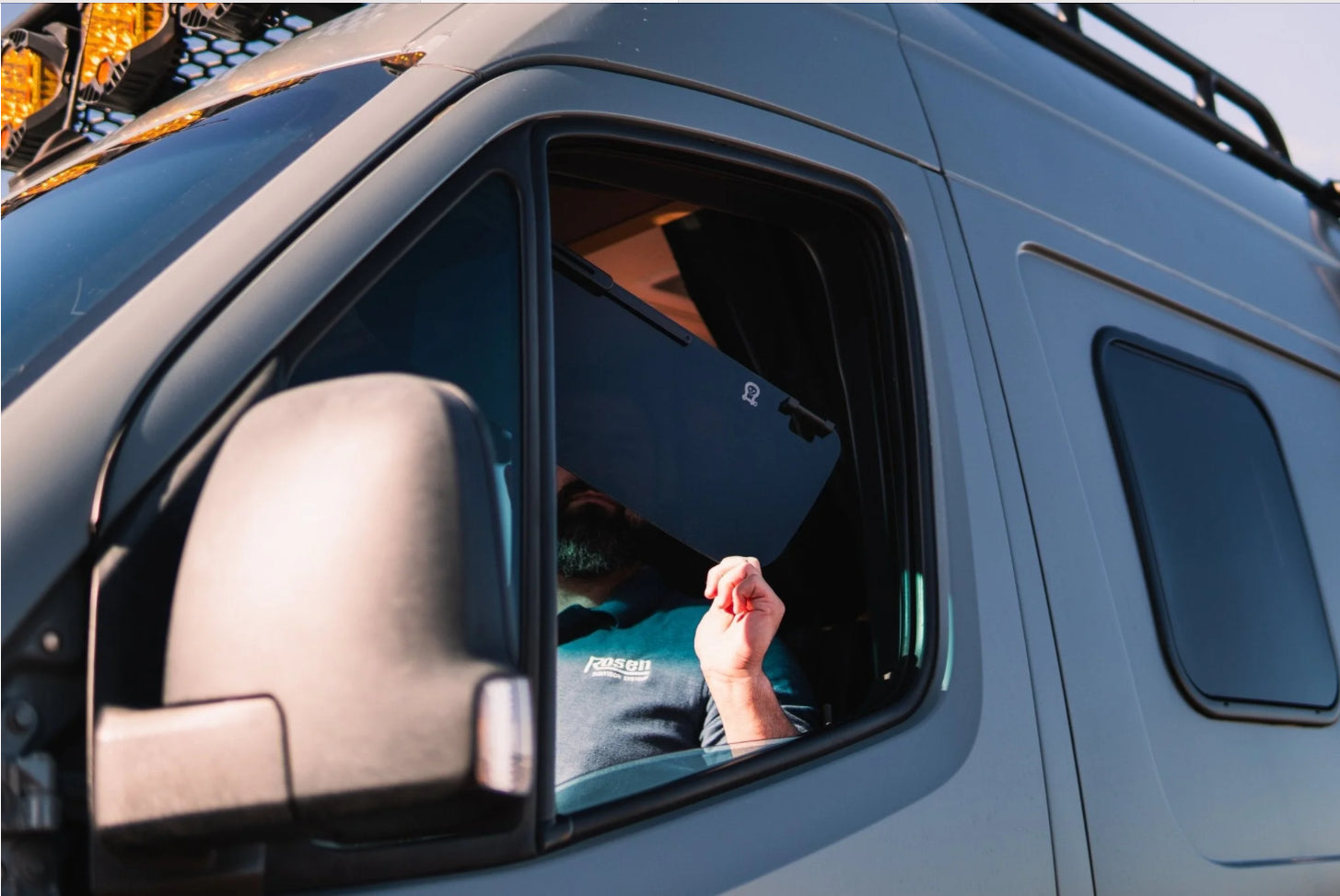
Not every Sprinter problem is mechanical. The factory horn is weak, the standard halogens are dim on a dark pass, and low sun blinds you on alpine roads. These are the upgrades owners do in the first month.
Symptoms. A horn nobody hears in traffic. Headlights that fall short at speed. A sun visor that cannot reach the side glare on a mountain road.
The fix
A louder horn, a proper LED headlight upgrade, and a multi-axis sun visor turn the 907 into the van it should have left the factory as. All three bolt on without cutting the loom.


Carrying Spares, Recovery Boards, and Bikes
A loaded Sprinter needs to carry a spare wheel, recovery boards, and bikes without sacrificing the interior.


The boards themselves ride outside the van on quick-release magnetic mounts. Pick the version that matches your recovery boards.


The Before-You-Leave Checklist
Most of these faults give warning if you look. Five minutes before a long trip saves a ruined week.
Quick pre-trip check
Run it hot. Take a 30+ minute motorway run a few days before you leave to complete a DPF regeneration.
Top AdBlue early. Fill before the warning, with sealed ISO 22241 fluid, ignition on but engine off.
Check the arches. Catch bubbling paint and bare chips before they turn into rust.
Test the cold start. A slow crank on a cool morning means glow plugs, not bad luck.
Mind the battery. If it drains while parked, draw-test it before the trip, not on the trip.
Carry an OBD reader. A cheap Bluetooth adapter and your phone let you read a fault code at the roadside instead of guessing.
The Sprinter Is Still the Right Van
None of this makes the Sprinter a bad base vehicle. It is the most capable long-distance van platform in its class, and most of these faults are cheap and well-documented once you know what you are looking at. The owners who get caught out are the ones who did not know the list. Now you do.
Look after the mechanical side. We will look after the inside of the cab.
The Original. Built in Switzerland since 2020.
Keep navigation on the dash. Carry gear without drilling.
See everything that fits a 2019+ Sprinter 907 →
Swiss-made. No drilling. No rust. No resale hit.
MORE FROM FIELD NOTES
Best Mercedes Sprinter Phone Mount in 2026 →
Written by Gaetan Della Pietra, founder of Tactic Engineering. We scan vans and build hardware for them. Sources: Sprinter-Source, owner forums, and published recall and service data. Always confirm a fix against your own vehicle and a qualified mechanic before work.

