




Porsche Taycan Common Problems, Real Costs & What You Can Actually Fix at Home
The Taycan is the most engaging electric car you can buy. It’s also one of the most complex. Most Taycan problems are software or electronics — not mechanical — which means many can be fixed with a reboot, an OTA update, or a €60 tool from Amazon. Here is an honest breakdown of what goes wrong, what it costs, and what you can handle yourself.
Key takeaways
- The 2020 Taycan has the most reported issues — later models benefit from refined software and updated hardware
- 12V battery drain is the most common owner complaint and largely preventable with a lithium-compatible trickle charger
- Most warning lights and software errors can be cleared with a hard reboot or OTA update — before calling a dealer
- Brake rotor rust is an EV-specific issue that costs nothing to fix if caught early
- Tires are the single biggest recurring expense for Taycan owners — heavy car, low-profile performance rubber
- The built-in wireless charger is widely considered a design flaw — there are better options
- All high-voltage components are covered by Porsche’s 8-year / 160,000 km battery warranty
At a glance: all common Taycan problems
| Problem | Severity | Typical cost (out of warranty) | Home fix? |
|---|---|---|---|
| 12V battery drain / failure | Medium | €250–450 replacement | ✓ Prevention |
| Software bugs / warning lights | Medium | €0–150 (dealer diagnostic) | ✓ Reboot / OTA |
| Brake rotor surface rust | Low | €400–900 full service | ✓ Easy technique |
| Tire wear (premature / uneven) | Medium | €250–500 per tire | ~ Rotation / pressure |
| Charging speed inconsistency (DC) | Low | €0 (software update) | ✓ Pre-conditioning |
| Built-in wireless charger overheating | Low | €119 (better solution exists) | ✓ Replace it |
| Adaptive suspension warnings | Medium | €300–800 (sensor/calibration) | ~ OTA first |
| High-voltage battery short circuit (recall) | High | €0 — covered by recall / warranty | Dealer only |
Problem by problem
1 — 12V battery drain
Replacement cost: €250–450 parts + €100–150 dealer fitting
Prevention cost: ~€60–80 (CTEK lithium charger)
The Taycan uses a 12V lithium-ion auxiliary battery alongside its 800V drive system. This 12V battery powers doors, locks, the frunk release, and all the electronics needed to wake up the main system. If it dies, nothing works — you can’t open the car, can’t charge, can’t drive.
On 2020 models in particular, a production flaw with certain battery suppliers caused early failures. Later models improved, but the underlying issue remains: if the car sits unused for around 10–14 days (especially in cold weather), the 12V can drain completely. The high-voltage battery is supposed to top it up, but owner experience shows this doesn’t always work reliably when the car is parked for extended periods.
If the 12V is already dead and the car won’t open: the emergency 12V terminal is accessible through a pull-out behind the driver-side fuse panel. Use a NOCO Boost or similar jump-starter on “dumb” mode to bring the battery back to life, then drive for 30 minutes to let the system fully recharge it.
2 — Software bugs, warning lights and the red “stop the car” screen
Dealer diagnostic fee: €80–180 (if it gets that far)
OTA update: €0
The Taycan runs on dozens of interconnected control units. When they disagree with each other — or when outdated software misinterprets sensor data — you get warning lights, the PCM freezing, erratic range estimates, or in more alarming cases the red “stop the vehicle in a safe place” screen. The good news: the vast majority of these are false positives triggered by software, not hardware failure.
The 2020 model year had the worst software instability. Porsche has issued multiple OTA updates since launch that specifically address charging errors, power management, and false-positive warning triggers. If you’ve never run a software update, do it — it’s the single most effective maintenance action you can take.
3 — Brake rotor surface rust and squeal
Full brake service (pads + rotors): €400–900 dealer
Home fix cost: €0
Because the Taycan does most of its deceleration through regenerative braking, the physical disc brakes see very little use in normal driving. Rotors that go weeks without contact with the pads develop a thin layer of surface rust — you’ll hear it as a metallic scraping or squeal, especially first thing in the morning or after rain. This is normal, not a defect. Porsche confirmed it when multiple owners raised it.
What’s less benign is that if the rust is left to build up for months, it can become uneven and cause juddering. Out-of-warranty rotor replacement on a Taycan runs to real money given the four-piston calipers and 360–420mm discs depending on trim.
4 — Premature and uneven tire wear
Per tire (OEM fitment): €250–500 (Pirelli P Zero Elect, Michelin Pilot Sport EV)
Monthly pressure check: €0
The Taycan weighs around 2,300 kg. It sits on 20" or 21" low-profile performance tires. It has instant, massive torque available at all times. This is a perfect recipe for tire wear, and owners — particularly Turbo S owners with the most aggressive torque outputs — report front tires wearing significantly faster than the rear, and some see uneven wear across the width of the tire.
The tires themselves are OEM-specified EV-compound rubber (the Pirelli P Zero Elect and Michelin Pilot Sport EV are the most common fitments), which are expensive to replace. Porsche dealers and independent specialists in Europe typically quote €250–500 per tire, with four-corner replacements easily crossing €1,500 including fitting and alignment.
5 — DC fast charging speed inconsistency
Cost: €0 (software update + technique)
The Taycan is rated for up to 270 kW DC fast charging on the Performance Battery Plus. In practice, many owners report seeing 60–120 kW at stations that advertise 150 kW+. This frustrates owners who planned charging stops around the rated speed. The issue is a combination of factors: station-side limits, battery temperature, and — particularly on early software versions — inconsistent communication between the car and the charger.
6 — The built-in wireless charger: a known design flaw
Cost to fix: CHF/€119
This one is mentioned constantly in Taycan owner forums and deserves its own section. Porsche includes a wireless charging pad hidden under a lid in the centre console. In practice it is largely useless for iPhone users: the lid traps heat, which causes iPhones to display thermal throttling warnings in warm weather; the camera bump on iPhone 14 and later physically prevents the phone from lying flat against the charging surface; and the phone is invisible and inaccessible while charging. Most Taycan owners stop using it within weeks.
This is also the same charger that contributes to the Taycan’s interior clutter problem more broadly: with no viable solution in the console, owners resort to vent clips (which stress Porsche’s precision-machined ventilation) or dash mounts (which cover the leather and cause irreversible UV exposure differences over time).
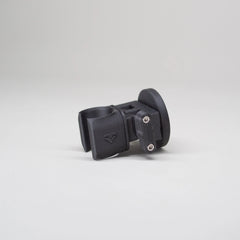
The phone mount Porsche should have included
Our Taycan MagSafe mount sits in the front cupholder — no contact with leather, Alcantara or vents. Tilts toward the driver. Charges at 15W Qi2. Designed from a precision 3D scan of the actual Taycan cupholder geometry. Compatible with all Taycan variants 2020–2026+.
7 — Adaptive suspension warnings
Sensor replacement (dealer): €300–800
OTA / recalibration: €0
Some Taycans display adaptive air suspension warnings or ride height errors — the car sitting unevenly, warning lights about suspension mode, or the system refusing to lower or raise for sport and comfort settings. In many cases this is not a hardware failure but a calibration drift or a voltage fluctuation that confuses the sensor readings.
8 — High-voltage battery recall (2020–2024 models)
Cost to owner: €0 — covered by active recall
This is the most serious issue affecting the Taycan. Multiple NHTSA and EU recalls cover a potential short circuit within the high-voltage battery modules across 2020–2024 production. The consequence of a short circuit is an increased risk of fire. Porsche has been proactive: affected owners are advised to charge to a maximum of 80% until the remedy is completed, and dealers are replacing battery modules at no charge.
If you’re buying a used Taycan: verify that all open recalls have been completed before purchase. This is particularly important for 2020–2022 model years where the greatest number of battery module replacements are outstanding.
What the warranty actually covers
Understanding Porsche’s warranty structure helps you know which problems cost you nothing versus which ones you’re paying for out of pocket.
| Coverage | Duration | What it covers |
|---|---|---|
| New vehicle warranty | 4 years / unlimited km | All components including software, suspension, electronics |
| High-voltage battery | 8 years / 160,000 km | Battery pack, modules, HV system components |
| Anti-perforation warranty | 12 years | Body panel corrosion |
| Active recalls | No expiry | Battery module recall — all affected VINs regardless of age or mileage |
| Consumables (not covered) | — | Tires, brake pads, 12V battery (in most cases), wiper blades |
While your Taycan is running perfectly —
Fix the one thing Porsche got wrong from day one. Our cupholder phone mount gives you 15W Qi2 charging, a tilted screen in your line of sight, and zero contact with any surface Porsche intended to leave untouched. Swiss-made. Ships to Europe, UK, and worldwide.
Model year guide: which Taycans are most reliable?
2020: Approach with caution. The first production year had the most software instability, early 12V battery failures, and the highest density of owner-reported issues. If buying a 2020, verify all recalls are complete and look for a clean service history.
2021–2022: Significantly better. Porsche resolved the most common 12V battery hardware issues mid-production run and released major software updates addressing charging and power management. These are the sweet spot for used Taycan buyers — post-teething, pre-depreciation cliff.
2023–2024: The most refined, with updated infotainment, improved software out of the box, and better energy management. Still subject to the HV battery recall on some VINs — check before buying.
2025–2026: The facelifted Taycan with revised interior, improved range, and updated PCM. Earliest production data looks positive, though owner data is still accumulating.
Frequently asked questions
Is the Porsche Taycan reliable?
It depends heavily on the model year. The 2020 Taycan had genuine reliability concerns — early battery issues, software instability, and a recall that affected most of the production run. From 2021 onwards, reliability improved substantially. Most problems reported by current owners are software-related, not mechanical, which means they’re generally fixable without major expense. The 8-year high-voltage battery warranty is a meaningful safety net for the most expensive component.
How much does a Porsche Taycan cost to maintain per year?
On average, Taycan owners spend €500–1,000 per year on routine maintenance — annual inspection, brake fluid, cabin filter, tire rotation. The big variables are tires (€250–500 per corner on a performance EV compound) and out-of-warranty electronics. Budget significantly more than a typical EV; budget significantly less than a 911.
Can I fix Taycan problems myself?
Many of the most common issues — software warnings, 12V drain prevention, brake rotor rust — are fully manageable at home with zero technical skill. You cannot touch high-voltage components yourself, but those are covered by warranty anyway. The practical home maintenance toolkit is a CTEK lithium charger (€60–80), monthly tire pressure checks, and occasional intentional brake use to scrub rotors.
What is the Taycan’s biggest problem?
The 12V auxiliary battery drain is the most widely reported owner frustration, especially on 2020–2022 models. It can leave you locked out of the car after just 10–14 days without driving. It’s preventable with a €60–80 lithium-compatible trickle charger. The HV battery short circuit recall is more serious in consequence but is being resolved by Porsche at no cost.
Is the Taycan affected by a recall?
Yes. A significant recall covers potential high-voltage battery short circuits on 2020–2024 Taycans across multiple variants. Porsche is replacing affected battery modules free of charge. Check your VIN via Porsche’s recall portal or your national vehicle safety authority to confirm whether your car is included and whether the remedy has been completed.
How do I stop my Taycan’s 12V battery from dying?
Use a CTEK LITHIUM US or equivalent LiFePO4-compatible maintainer, hardwired to the frunk terminals. Do not use a lead-acid CTEK (MXS 5.0 etc.) — the Taycan’s 12V is lithium-ion. Porsche’s own Charge-O-Mat Pro is the same hardware and plugs into the centre console if your garage outlet is nearby. Keep the main HV battery above 40% charge when the car is stored — this helps the DC-DC converter top up the 12V more reliably.
Why does my Taycan’s wireless charger not work with iPhone?
The factory wireless charger sits under a closed lid that traps heat, causing iPhones to throttle or warn about temperature. The camera bump on iPhone 14 and later also prevents flat contact with the charging surface. Most Taycan owners stop using it. An aftermarket cupholder-mounted Qi2 charger solves all three problems — open-air, proper alignment, and 15W charging — without touching any interior surface.
One more upgrade worth making
Every problem on this list has a fix. The one Porsche didn’t fix themselves — phone mounting and charging — we did. Precision 3D-scanned cupholder fit. 15W Qi2. Tilts toward the driver. No contact with leather, Alcantara or vents. Swiss-made.

